Your overhead tank supplies the water you use for cooking, bathing, washing vegetables and, in many homes, drinking. Yet it is one of the most neglected parts of a house. Because the tank sits on the roof or underground, out of sight, most families only think about it when the water starts to smell, look cloudy or taste strange. By then, the inside of the tank has usually been collecting dirt for a long time.
What builds up inside a water tank
Even if your water supply is clean when it enters the tank, the tank itself slowly changes the water. Over a few months, several things start to collect on the walls and floor:
- Silt, sand and fine sediment that settle at the bottom
- Algae, especially in tanks that get sunlight or have loose lids
- Bacteria that grow in still, warm water
- Sludge that can clog pipes, taps and water purifiers
- Dust, insects and leaves that enter through gaps and vents
In the hot Tricity summers, rooftop tanks heat up quickly, which helps algae and bacteria grow faster. During the monsoon, muddy supply water can add a lot of silt in a short time.
Why every 6 months?
Contaminants build up steadily, not all at once. If a tank is cleaned only once every few years, the layer of sludge becomes thick and hard to remove, and the water passes over it every day. Cleaning twice a year keeps this buildup under control before it affects the quality of your water or your family’s health. A simple way to remember is to book one clean before summer and one after the monsoon.
Signs your tank needs cleaning now
Do not wait for the six-month mark if you notice any of these signs:
- Cloudy, yellowish or brownish water from the taps
- A musty or unpleasant smell
- Green algae or dark patches visible inside the tank
- Bits of dirt in buckets or a purifier that clogs often
- A change in the taste of the water
Why a quick rinse is not enough
Many people try to clean the tank themselves by draining it and splashing water around with a brush. This removes some loose dirt, but sludge in the corners and algae on the walls usually stay behind. Climbing into a tank or onto a roof without the right equipment is also risky, and harsh household chemicals can leave residue in your drinking water.
How professional tank cleaning works
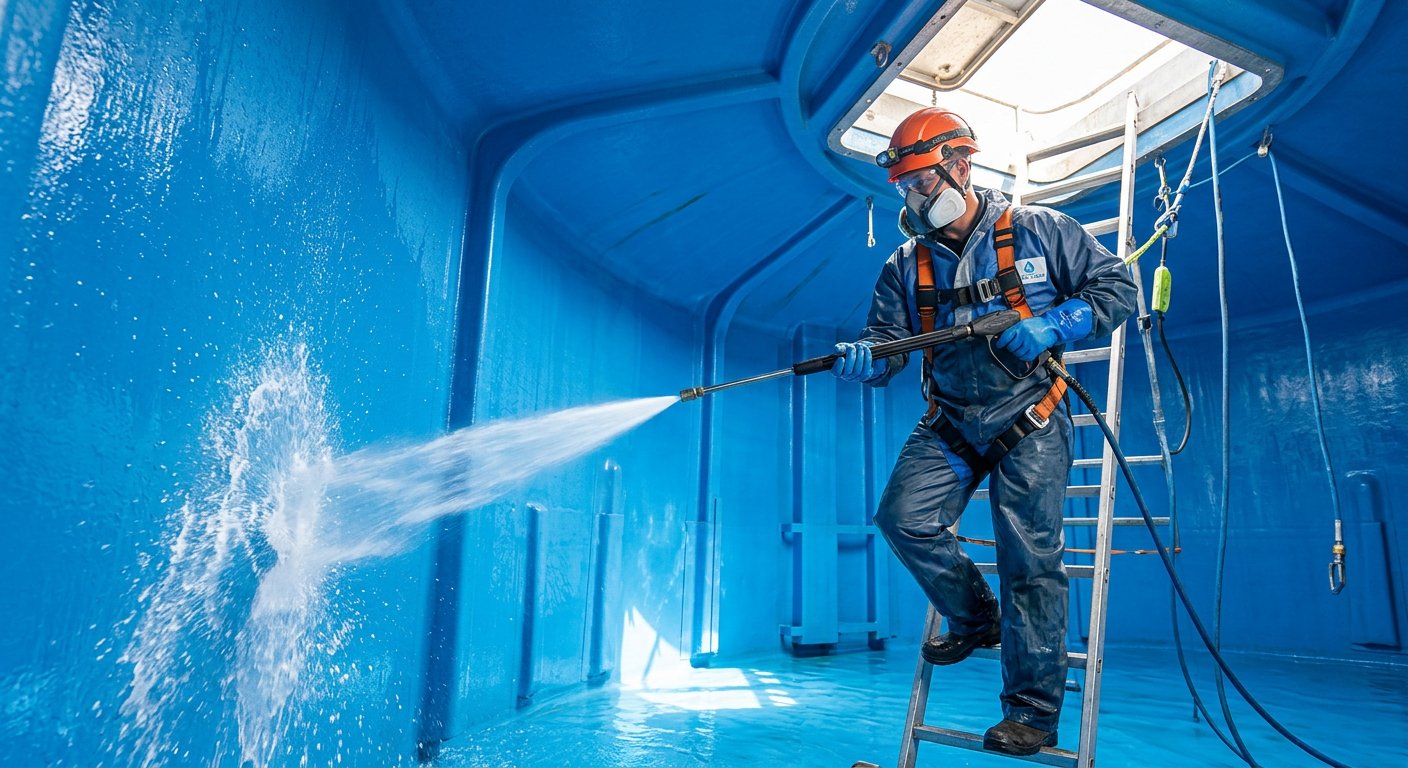
A professional clean is a step-by-step process. The tank is first drained, keeping some water aside if needed. Sediment and sludge are removed with vacuum extraction, which uses very little water. The walls, floor and lid are then scrubbed and washed with high-pressure jets. After that, the tank is disinfected with safe, food-grade disinfectants and given an anti-bacterial and UV treatment. Finally, the tank is rinsed and refilled, ready to use.
For most home tanks, the whole job takes about 45 minutes to 2 hours, depending on the size of the tank and how much dirt has settled. Overhead tanks, underground sumps and ground-level tanks can all be cleaned this way.
Simple habits between cleanings
- Keep the tank lid closed and tight at all times
- Check that vents and overflow pipes are covered with mesh
- Look inside the tank once a month for algae or dirt
- Replace cracked or damaged lids quickly
Clean water starts with a clean tank. Book your water tank cleaning with Clean Today across Chandigarh, Mohali, Panchkula, Zirakpur, Kharar and New Chandigarh, and keep your family’s water safe all year.
Need water tank cleaning?
Get a free quote from our team today.